A boiler and a furnace both burn fuel to heat your home. The difference is what carries the heat: a boiler heats water and sends it through pipes to radiators or radiant floors, while a furnace heats air and blows it through ducts. That one difference shapes comfort, cooling options, maintenance and what it takes to replace either system. Plenty of older homes around Aurora still heat with radiators, while most newer homes run furnaces, so we work on both every heating season. Here is how they compare.
A boiler heats water, or in older homes makes steam, and moves that heat through a closed loop of pipes. In a hot water system, a circulator pump pushes water through cast iron radiators, baseboard convectors or tubing in the floor, then back to the boiler to be reheated. An expansion tank absorbs the change in water volume as it heats, and zone valves or separate pumps let different parts of the house run at different temperatures. Steam systems need no pump: steam rises to the radiators, gives up its heat, condenses and drains back to the boiler.
Because nothing blows air around, boiler heat is quiet and even. Radiators and heated floors warm the people and objects in a room directly, so many homeowners find a lower thermostat setting still feels comfortable.
A furnace burns natural gas (or uses electric elements or oil) inside a heat exchanger. A blower pulls air from the house through return ducts and a filter, pushes it across the hot heat exchanger and sends it back out through supply ducts and registers. Combustion gases stay on the other side of the heat exchanger and leave through the flue or, on a high-efficiency furnace, through PVC vent pipe.
Forced air heats a room quickly, and the same ductwork carries central air conditioning in summer. The blower also gives you a place to add whole-home filtration, a humidifier or air purification.
| Boiler | Furnace | |
|---|---|---|
| Carries heat with | Hot water or steam in pipes | Heated air in ducts |
| Delivers heat through | Radiators, baseboard or radiant floors | Supply registers |
| Comfort | Quiet, even, no drafts | Fast warm-up, can feel drier |
| Central air | Needs a separate system, such as ductless mini-splits | Shares the ductwork with central AC |
| Air filtration and humidity | Not part of the system | Filter, humidifier and purifier mount on the furnace |
| High-efficiency option | Condensing boilers, 90%+ AFUE | Condensing furnaces, 90%+ AFUE |
| Typical lifespan | 20 to 30 years | 15 to 20 years |
| Annual maintenance | Pressure, relief valve, circulators, combustion | Filter, burners, blower, heat exchanger, combustion |
Both come in high-efficiency condensing versions rated above 90% AFUE, meaning more than 90 cents of every fuel dollar becomes heat in the house. In practice, efficiency depends as much on the rest of the system as on the equipment. Water holds heat far better than air and pipes lose little along the way, while leaky or uninsulated ductwork can waste a real share of a furnace's output. A condensing boiler also needs low return-water temperatures to reach its rated efficiency, which radiant floors and well-sized radiators provide. The honest answer: a properly sized, well-maintained system of either type will beat a neglected one of the other.
Boiler heat wins on quiet and evenness: no blower noise, no blasts of warm air, no dust carried from room to room. Forced air wins on speed and versatility. The same ducts that carry heat carry central air conditioning, and the furnace cabinet is where an AprilAire filter, whole-home humidifier or air purifier goes. Forced-air heat tends to feel drier in an Illinois winter, which is why many furnace homes add a humidifier.
Boiler homes can still have air conditioning. Ductless mini-splits add cooling room by room without new ductwork, and we install Mitsubishi Electric ductless systems.
We do not publish prices, because the number depends on your house. For either system, the main factors are the size and efficiency of the new equipment, whether the venting has to change (a high-efficiency unit needs PVC venting and a condensate drain), the condition of the existing ductwork or piping, and any utility rebates that apply. Boiler equipment and installation usually cost more than a comparable furnace, while boilers tend to last longer. Replacing like for like is almost always the least disruptive project. Financing is available through Service Finance.
Yes, but it is a bigger project than replacing the boiler. A furnace needs supply and return ductwork in every room, and in an older home with plaster walls that means opening walls, ceilings or closets to run it. The radiators and piping come out, and the gas line and venting are reworked for the new equipment. Homeowners usually make the switch when they want central air anyway or are already remodeling. Going the other way, from a furnace to a boiler, is rare and means installing piping plus radiators or radiant tubing.
A middle path many radiator homes choose: keep the boiler for winter heat and add ductless mini-splits for summer cooling.
If you already have a boiler and radiators in good shape, replacing the boiler is usually the better value, and a modern condensing or combination boiler can often connect to your existing loops. See boiler installation in Aurora, or boiler repair if the system just needs attention. If you have ductwork, or want central air and whole-home filtration, a furnace is the natural fit; see furnace installation in Aurora. Not sure? Call 630-897-5248 and we will look at what you have before recommending anything.
A boiler heats water or makes steam and sends it through pipes to radiators, baseboard or radiant floors. A furnace heats air and blows it through ducts to registers in each room. Both burn fuel to make heat; they differ in what carries that heat through the house.
Boilers warm a room through radiant heat from radiators or heated floors, which is quiet and even. Furnaces warm a room by blowing heated air through registers, which heats quickly and shares ductwork with central air conditioning.
Both are available as condensing models rated above 90% AFUE. Real-world efficiency depends on the whole system: hot water piping loses little heat, while leaky ductwork can waste part of a furnace's output. A properly sized, well-maintained system of either type is the efficient choice.
Yes, but switching from a boiler to a furnace means installing ductwork throughout the house, removing radiators and reworking the gas line and venting. Going from a furnace to a boiler means adding piping and radiators or radiant tubing. Many radiator homes keep the boiler and add ductless mini-splits for cooling instead.
A boiler does not move air, so it does not stir up dust. A furnace moves all the air in the house, which can spread dust but also lets you clean it: a whole-home filter, humidifier or air purifier mounts right on the furnace.
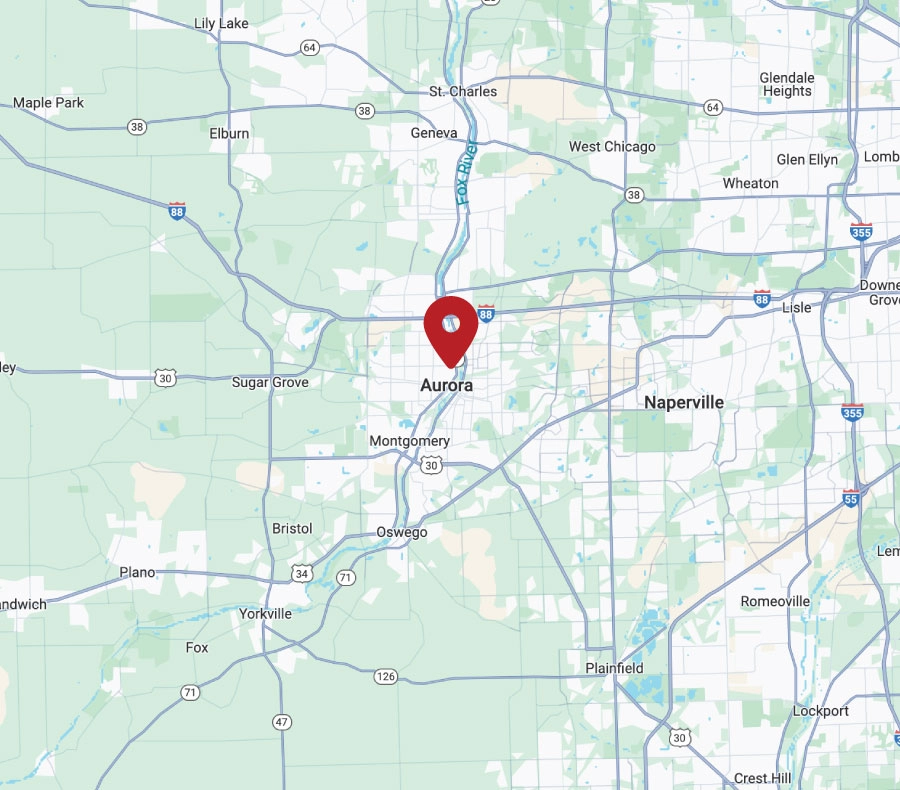
We proudly serve Aurora, IL, and nearby communities, including:
If you're looking for expert HVAC services in Aurora or any of these areas, contact Youngren's Heating & Cooling today!
Don't worry! While we've listed our primary service areas like Aurora and Naperville, we often serve surrounding communities in the Fox Valley Area as well.
View All Service Areas
© Red Barn Media Group 2026